
Guide
The core in pull-ups: anti-extension, the hollow body and the link between your hands and your hips
Your core in a pull-up is not about showing off abs; it is the muscular link that keeps your ribcage, pelvis and lumbar spine locked together while your lats try to pull your lower back into extension. When the abdominals brace against that pull, an action called anti-extension, the force from your hands transfers into lifting your hips instead of leaking into a swinging arch. Here is the anatomy of that link, the hollow body position phase by phase, what the research shows and how to train it.
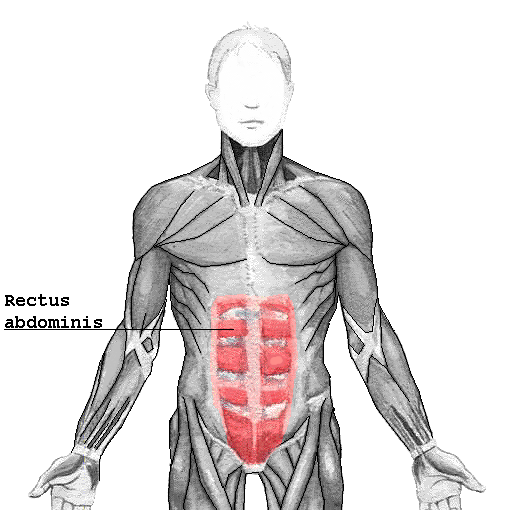
What does "the core" actually do during a pull-up?
A pull-up looks like an arm and back exercise, and it is, but the trunk has one job: stop the spine from moving while the lats generate huge force at one end of it. That job is anti-extension, because the main threat to a strict pull-up is your lower back arching as the lats pull, not rotation or flexion. The abdominals resist that arch, the thoracolumbar fascia carries the lats' tension across your lower back, and the erector spinae and multifidus fine-tune how much extension the spine allows.[2] When that chain holds, your hands and hips are connected by a rigid beam; when it does not, part of every rep is wasted moving your spine instead of your body.
Which muscles make up the anti-extension chain?
| Muscle | Origin | Insertion | Nerve | Main action | Role in a pull-up |
|---|---|---|---|---|---|
| Rectus abdominis | Pubic crest | Costal cartilages 5–7, xiphoid process | Thoracoabdominal nerves (T7–T11) | Flexes the trunk | Pulls ribs and pelvis together to cancel lumbar extension |
| External oblique | Ribs 5–12 | Iliac crest, linea alba | Thoracoabdominal nerves (T7–T11) | Flexion, contralateral rotation | Co-contracts with the internal oblique to brace the trunk[1] |
| Internal oblique | Thoracolumbar fascia, iliac crest | Ribs 10–12, linea alba | Iliohypogastric, ilioinguinal nerves (T12–L1) | Flexion, ipsilateral rotation | Raises intra-abdominal pressure, locks ribcage to pelvis |
| Transversus abdominis | Thoracolumbar fascia, iliac crest, costal cartilages 7–12 | Linea alba | Thoracoabdominal, iliohypogastric nerves (T7–L1) | Compresses the abdominal cavity | Deepest brace layer; stiffens the trunk before the pull starts[1] |
| Erector spinae group | Sacrum, iliac crest, vertebral processes | Ribs and vertebrae higher up | Dorsal rami, segmental | Extends and stabilizes the spine | Holds the lumbar curve steady against the lats' pull[2] |
| Multifidus | Sacrum, lumbar mammillary processes | Spinous processes 2–4 levels above | Dorsal rami, segmental | Segmental stiffness | Stops single lumbar segments giving way under load[2] |
How does the thoracolumbar fascia link your lats to your trunk?
The latissimus dorsi does not stop at your lower back; it blends into a thick sheet of connective tissue called the thoracolumbar fascia, which also anchors the glutes, the erector spinae, the abdominal muscles and, through the sacrum, the opposite hamstring. A detailed anatomical review describes this fascia as a load-transferring structure connecting the arm to the leg across the lumbopelvic region, not a passive wrapper.[2] The pull you generate at the bar does not stay in your shoulder: it travels down the lat, into the fascia, and arrives at your lumbar spine and pelvis as a real mechanical force, whether you intend it to or not.
Why do the lats pull your lower back into extension, and why must the abs resist it?
The latissimus dorsi is a shoulder extensor and internal rotator whose lower fibers blend directly into the thoracolumbar fascia over the erector spinae. When the lats contract hard to pull your bodyweight toward the bar, that tension pulls on the fascia and tips the pelvis forward and extends the lumbar spine, the same way pulling down on the back of a shirt tugs the waistband up and forward. Left unchecked, this shows up as an arched lower back and hips trailing behind the shoulders. The abdominals oppose that pull by flexing the trunk slightly and compressing the abdomen, the anti-extension action that keeps the lumbar curve from increasing. EMG recordings during pull-ups and chin-ups show the external oblique active at roughly 31 to 35 percent of its maximum voluntary contraction and the erector spinae at roughly 39 to 41 percent across the rep, confirming that flexors and extensors of the trunk work together rather than one relaxing while the other pulls.[3]
What does the hollow body position look like phase by phase?
The hollow body is what anti-extension looks like on a pull-up bar: ribs down, pelvis level or tilted slightly back, legs together, no gap opening anywhere along the spine.
- Dead hang. Set the brace before you move: ribs pulled down, glutes and inner thighs squeezed, no sag in the lower back despite relaxed arms.
- Initiation. Abdominals and glutes fire a beat before the lats, locking the pelvis to the ribcage so the pull has something rigid to work against.
- Mid-pull. The lats pull hardest on the fascia here, and the lumbar spine is most at risk of extending. The brace has to hold loudest here, not loosen.
- Top of the rep. Hips stay stacked under the shoulders. Leaning back to get the chin over the bar is the hollow position failing at the worst moment.
- Lowering. The brace continues eccentrically. Losing the hollow on the way down is as common, and as costly, as losing it on the way up.
What happens when the core fails during a pull-up?
You can watch anti-extension fail in real time. An arched lower back is the clearest sign: ribs flare, the pelvis tips forward, and the lumbar spine takes load the abdominals should have intercepted. Swinging and kipping come next, borrowing momentum from the hips and legs because the trunk cannot transmit force in a straight line. A knee lift partway through the rep is often an improvised fix, trading hip flexion for stability the abs did not provide. All three describe the same problem: force generated at the hands leaks into motion of the spine, hips or legs instead of lifting your body straight toward the bar.
What does research say about trunk muscle activity during hanging and pull-up training?
The EMG numbers above come from a study of trained adults performing pull-ups, chin-ups and a rotational variant, measuring the erector spinae and external oblique alongside the prime movers.[3] A separate EMG study on the prone plank found that deliberately bracing with an abdominal hollowing maneuver, drawing the navel in and flattening the lower back, significantly raised activity in both obliques and the lumbar erector spinae compared with an unbraced plank, with the largest increase in the internal oblique.[4] The rectus abdominis barely changed between conditions, which fits the anatomy: the obliques, transversus abdominis and erector spinae do most of the stabilizing, while the rectus abdominis mainly flexes the trunk when asked to. A widely cited review of core strengthening frames this stabilizing role, not visible muscle, as the actual point of "core" training.[5]
How do you cue and feel the brace?
- Ribs down, not flared. A ribcage popping forward in a mirror means the lats are winning the fight for your lumbar spine.
- Exhale and brace, don't just suck in. Brace like you expect a light punch to the stomach, not pull your navel to your spine.
- Squeeze glutes and inner thighs. This locks the pelvis so the abdominals aren't fighting the hips as well as the lats.
- Set the hollow before you pull, not after. Bracing mid-rep is almost always too late to stop an arch already underway.
- Breathe within the brace. Full breath-holding through a whole set raises intra-abdominal pressure more than a bodyweight pull-up needs.[7]
Which drills build a hollow body that holds up on the bar?
- Hollow body hold (floor). Lower back pressed flat, shoulders and legs lifted slightly, 3 sets of 15–30 seconds; where you first feel the brace without the lats pulling against it.
- Hanging knee raise. From a dead hang, raise the knees without the ribcage flaring or the body swinging, 3 sets of 8–12; trains the brace under the exact load direction of a pull-up.
- Dead bug. On your back, extend opposite arm and leg while the lower back stays pinned to the floor, 3 sets of 8–10 per side; trains resisting extension while a limb moves.
- RKC plank. A short, maximally braced plank, glutes and quads squeezed hard, held 10–20 seconds for 3 sets; overloads the brace itself rather than endurance.
- Hollow-body hang. From a dead hang, pull the ribcage down and tuck the pelvis until the body reads as one straight line, 3 sets of 15–20 seconds; the exact position a pull-up starts from.
What medical issues should you know about?
Lower back pain after sessions heavy on arching, like kipping pull-ups or any pulling with a loose trunk, usually comes from repeated lumbar hyperextension rather than one injury. Easing the arch, not just resting, is usually what resolves it.
If you are managing diastasis recti, a separation of connective tissue at the abdominal midline common postpartum, high-tension anti-extension work can be appropriate once cleared, but check with a clinician first and keep the midline from doming during the brace.[6] The same caution applies to a known or suspected hernia: the Valsalva maneuver, bearing down and holding your breath, is common in hard bracing and meaningfully raises intra-abdominal pressure while held.[7] Brace with a controlled exhale rather than a held breath if any of this applies to you, and get evaluated before loading hard holds like the RKC plank. See a clinician rather than adjusting training alone for a visible bulge at the midline or groin, pain radiating down a leg, numbness, or back pain lasting more than two or three weeks despite easing off.
What are the most common mistakes?
- Flared ribs and an anterior pelvic tilt at rest. A resting posture that already looks arched only gets worse under load.
- Bracing only at the bottom, then letting go mid-rep. The brace must survive the whole pull, especially the middle.
- Holding your breath for the entire set. One brace per rep helps; a held breath across ten reps just adds pressure.[7]
- Kipping to bypass a weak core instead of building one. Momentum hides the problem rather than fixing it.
- Training only crunches and sit-ups. Those train flexion, not the anti-extension a pull-up demands.
Frequently asked questions
What is a hollow body and why does it matter for pull-ups?
The hollow body is a position where the ribs are pulled down, the pelvis is level or tilted slightly back, and the legs are together, with no gap or arch anywhere along the spine. It matters because it is the physical expression of anti-extension, the job your abdominals do to stop your lats from pulling your lower back into an arch during the pull.
Is my back supposed to arch during a pull-up?
No. A small, natural lumbar curve stays, but a visible arch with the ribs flaring forward means the lats are winning the fight against your abdominals. That arch wastes force and loads the lower back more than it should carry.
How long should I hold a hollow body position?
On the floor, 15 to 30 seconds for 3 sets is a good starting target, building toward 45 to 60 seconds. On the bar, start with 10 to 20 second hollow-body hangs and only add pulling once the shape holds without effort.
Can pull-ups alone give me visible abs?
Pull-ups load the obliques, transversus abdominis and erector spinae hard as stabilizers, but they do little rectus abdominis flexion work and nothing for the layer of fat that sits over the muscle. Visible abs come mostly from diet; pull-ups build the trunk strength that supports better pulling, not a six-pack by themselves.
My lower back hurts after pull-ups. Is that a core problem?
Often, yes, usually from arching under load rather than bracing. Check your form first: ribs down, pelvis neutral, no kipping. If pain persists for more than two or three weeks, radiates down a leg, or comes with numbness, see a clinician rather than guessing.
Sources
- Varacallo MA, Scharbach S, Al-Dhahir MA. Anatomy, Anterolateral Abdominal Wall Muscles. StatPearls [Internet], NCBI Bookshelf, 2023.
- Willard FH, Vleeming A, Schuenke MD, Danneels L, Schleip R. The thoracolumbar fascia: anatomy, function and clinical considerations. J Anat, 2012.
- Youdas JW, Amundson CL, Cicero KS, et al. Surface electromyographic activation patterns and elbow joint motion during a pull-up, chin-up, or Perfect-Pullup rotational exercise. J Strength Cond Res, 2010.
- García-Jaén M, Cortell-Tormo JM, Hernández-Sánchez S, Tortosa-Martínez J. Influence of Abdominal Hollowing Maneuver on the Core Musculature Activation during the Prone Plank Exercise. Int J Environ Res Public Health, 2020.
- Akuthota V, Nadler SF. Core strengthening. Arch Phys Med Rehabil, 2004.
- Hall H, Sanjaghsaz H. Diastasis Recti Rehabilitation. StatPearls [Internet], NCBI Bookshelf, 2023.
- Srivastav S, Jamil RT, Dua A, Zeltser R. Valsalva Maneuver. StatPearls [Internet], NCBI Bookshelf, 2025.
Keep reading
- Breathing and bracing for pull-ups: the diaphragm, intra-abdominal pressure and when to inhale, hold and exhale
- Glutes, hips and legs in a strict pull-up: why "squeeze your glutes" works
- Latissimus dorsi and pull-ups: the anatomy of your biggest pulling muscle
- Scapular muscles and pull-ups: an anatomy lesson for trainees
- Pull-up mistakes: 7 form errors that hold you back (and the fixes)
- Pull-up muscles worked: what you're really training
- Dead hang benefits: what it does, how long to hang and how to progress
Let the plan do the counting.
PullUp Master runs this exact progression for you: it places you on the right block, guides every set with clips and a rest timer, and rewrites your next session from how the last one felt — with an estimate of how many weeks your first rep is away.
PullUp Master is a training tool, not medical advice. Train within your ability.